


Pain in the lumbar region is one of the most common reasons that force the patient to seek help from a neurologist or therapist.Pain in the lumbosacral spine can disrupt work capacity for a long time, making movement and self-care impossible.Acute pain in the lower back affects both men and women equally often.
Occurring with greater frequency in middle and old age, low back pain can often occur in adolescents and young adults.This is due to rapid growth, weakness in weak lower back muscles and injuries.Thus, lumbosacral back pain is a pressing problem that everyone can face.
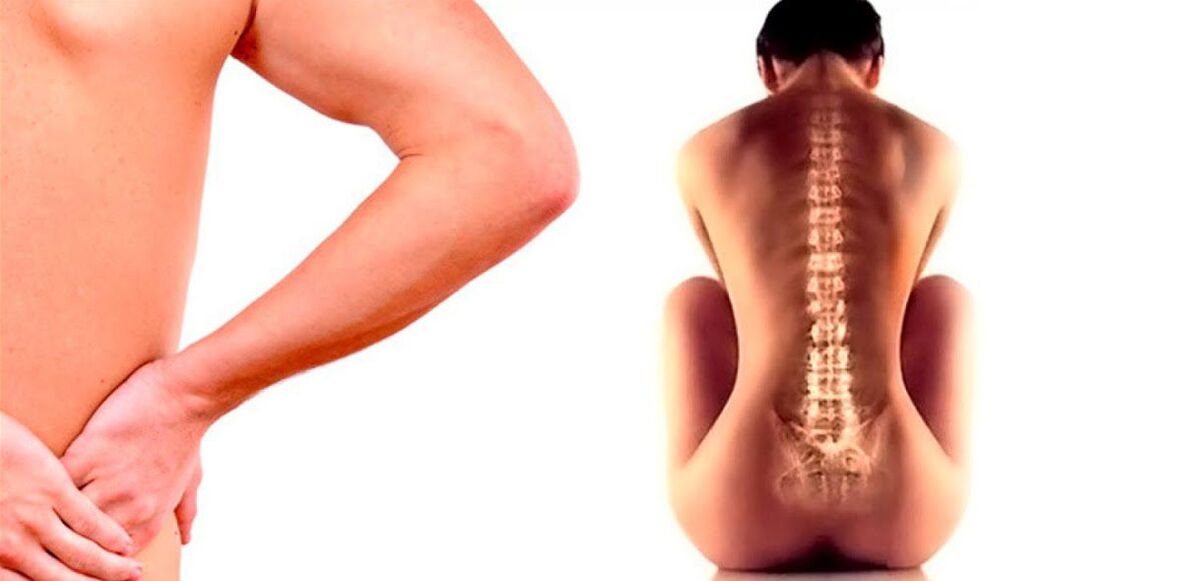
Pain in the lower back with lumbar osteochondrosis
Pain in the lower back with osteochondrosis can increase when coughing and sneezing, during any movement, especially when bending the body forward.Along with pain in the lower back, lumbar osteochondrosis can be manifested by impaired sensitivity of certain areas of the skin or muscles of the lower half of the torso and legs, weakening or disappearance of tendon reflexes in the legs.
- As a rule, with osteochondrosis, a curvature of the lumbar spine is observed.Depending on the plane in which the curvature occurs, scoliosis (curvature to the right or left), lordosis (curvature forward) and kyphosis (flattening of the lumbar region or even its curvature backward) are distinguished.If, due to osteochondrosis, the spinal cord is compressed, there is a violation of urination or defecation, as well as a violation of the sensitivity of the bladder or genital organs.
- However, most often lumbar osteochondrosis manifests itself as radicular pain - i.e.develops as a result of pinching of nerve roots exiting the spinal cord at one level or another.Thus, one of the well-known lumbar syndromes is lumbago.It occurs at a time of physical exertion or in an uncomfortable position of the body, and sometimes for no apparent reason.Suddenly, within a few minutes or hours, there is a sharp shooting pain ("lumbago"), often burning and popping ("like a stake stuck in the back").
The patient freezes in an awkward position and cannot stand up if the attack occurs while lifting something heavy.Attempts to get out of bed, cough or bend your leg are accompanied by a sharp increase in pain in the lower back and sacrum.If the patient is asked to stand up, a sharp immobility of the entire lumbar region is revealed due to muscle tension.
Tests for lumbosacral osteochondrosis
These tests are used as a way to make a preliminary diagnosis and are named after the doctors who suggested them.
| Dejerine symptom | If you tense your stomach and listen to your lower back, the pain will get worse.In this case, there is a high probability that the patient has osteochondrosis. |
| Neri's symptom | If you sharply tilt your head forward before touching your chest, you experience pain in the lower back, this also indicates problems with the spine. |
| Lasègue's symptom | this can be felt after the following actions: lie on your back, you need to lift each leg in turn.If the lower back then begins to curve and the pain radiates along the sciatic nerve to the leg, this is evidence of spinal pathology. |
| Lerrey's symptom | if a person experiences pain along the sciatic nerve after he rises forward without bending his knees, from a lying position, we are talking about manifestations of chondrosis. |
Herniated intervertebral disc
Intervertebral disc herniation is an equally rare cause, the clinical manifestation of which is lumbosacral back pain.The intervertebral disc (internal nucleus pulposus) with prolonged traumatic exposure, as well as with age, loses its elastic properties and elastic ability.
With prolonged exposure (overweight, injury, progressive osteoporosis), the fibrous ring of the disc thins and defects form in it.Through these weak spots in the annulus fibrosus, the nucleus pulposus of the disc can shift and even bulge.
Causes of lower back pain
Back pain is such a non-specific symptom that can be caused by many different reasons.Depending on how intense the back pain in the lumbar region is, whether it is constant or periodic, primary or secondary, there may be reasons that cause it:
Chronic pain:
- osteomyelitis;
- Ankylosing spondylitis;
- spondylosis deformans;
- Growing pains - scoliosis;
- Infectious lesions of intervertebral discs and vertebrae (epidural abscess, spinal tuberculosis, brucellosis);
- Metabolic bone diseases - osteomalacia, osteoporosis;
- Primary tumors and metastatic tumors of the spinal cord, vertebrae, retroperitoneal space;
- Non-infectious inflammatory diseases - rheumatoid arthritis, Reiter's syndrome, ankylosing spondylitis;
- Kidney tumors;
- Atherosclerosis of the abdominal aorta and its branches.
Sharp pain:
- spondyloarthrosis;
- Pathologies of the hip joint;
- Spinal epiduritis;
- Bulging of the intervertebral discs in the lumbar region;
- Osteochondrosis of the spine;
- Acute intervertebral hernia;
- Intestinal obstruction, atypical course of acute appendicitis;
- urolithiasis;
- Acute dislocation, vertebral fractures;
- Lumbago, sciatica;
- Acute spinal circulatory disorders - stroke;
- Acute pyelonephritis.
Radiating pain in some diseases of the internal organs:
- Diseases of the pelvic organs.In women - inflammatory processes in the uterine appendages, endometriosis, uterine cancer, ovarian cancer, STDs (chlamydia, ureaplasmosis, gonorrhea, trichomoniasis, etc.) In men - prostatitis, prostate cancer;
- Diseases of the stomach, pancreas, duodenum, gall bladder;
- Intestinal diseases - inflammation of the diverticulum, ulcerative colitis, intestinal tumors;
- Kidney diseases - renal colic, kidney stones;
- Disruptive aortic aneurysm.
Physiological reasons
Lower back pain can occur if:
- Are you overweight?
- Additional risk for women;
- You are pregnant or have recently given birth;
- Spend a lot of time driving a car or working on a computer;
- Lead a mostly sedentary (office workers) or upright (salesmen, waiters, street advertising workers, surgeons) lifestyle;
- Do dynamic physical work with sudden changes in body position (especially if your specialty involves heavy physical exertion);
- You overwork yourself in the gym or fitness club.Be extremely careful if you have recently started exercising;
- Are you interested in gardening?
- Postmenopause has occurred, which predisposes to the development of osteoporosis.
Low back pain and pregnancy
Pregnancy worsens the manifestations of diseases existing in the mother's body.Due to changes in hormonal levels and increased stress, pathologies appear especially often in the second half of pregnancy.In addition to the pain that accompanies the threat of premature birth, the cause of lower back pain in a pregnant woman can be:
- herniated intervertebral disc;
- sciatica;
- pancreatitis;
- pyelonephritis;
- urolithiasis (kidney stones).
Why does my back hurt below the waist?
When the back hurts under the lower back, in addition to the obvious diseases of the spine (sciatica, lumbago, intervertebral hernia, ankylosing spondylitis, etc.), possible causes are periodic pain during menstruation in women, diseases of the female genital organs, such as inflammation of the uterine appendages - oophoritis, salpingo-oophoritis (adnexitis), as well as diseases of the pelvis, peritoneum, intestines, inflammation of the appendix(dilation of the cecum, in men - diseases of the prostate gland, bladder.
Pain over the lower back
If the back hurts on the right above the lower back, the pain in the liver can radiate, with any pathological changes in the liver - hepatitis, liver failure, taking toxic drugs.Most often, the pain is localized in the right hypochondrium.
If pain is felt on the right or left just above the lower back, it is very possible that the cause is acute kidney disease.Many chronic kidney diseases, such as polycystic kidney disease, malignant kidney tumors, chronic pyelonephritis, are accompanied by mild symptoms, as the kidney capsule gradually stretches.
When should you see a doctor?
- If the back pain irrigates the lower back and is located a little higher (in the chest area).The pain is accompanied by sweating, bouts of vomiting and nausea, shortness of breath.
- The pain radiates to the peritoneum, chest, neck, jaw.
- The patient feels dizzy and confused.
- Tachycardia begins
- Spinal cord injury accompanied by loss of control over bowel movements and urination.
- The legs become weak, the buttocks and genitals go numb.
Diagnosis
To determine what disease caused pain in the lower back, it is necessary to undergo a comprehensive diagnostic examination.
Laboratory methods:
- General and biochemical tests of urine and blood.
- Tests for the presence of tumor markers in the blood during tumor formation.
Instrumental research methods:
- X-ray of the spine.
- Endoscopy of the intestine, stomach and uterus.
- Ultrasound examination of the abdominal cavity.
- Nuclear magnetic resonance.
How to treat back pain in the lumbar region?
How to properly treat the lower back?The approach to the treatment of the back depends entirely on the symptoms of the disease, the diagnosis made by the doctor and the stage of the disease.An integrated approach is usually used, including several treatment methods.
Pain relievers.The ointment helps relieve inflammation, sprains and has a warming effect if the lower back has a cold.
The following groups of ointments are distinguished:
- combined drugs (used for sprains and injuries, along with anti-inflammatory and analgesic effects, they have a healing effect due to the heparin and demethylsulfoxide contained in them);
- anti-inflammatory analgesics (they contain cooling medicinal substances that relieve irritation - menthol, lavender and pain relievers);
- chondroprotectors (one of the active components of such drugs is the substance chondroitin sulfate, used in pathological processes in the cartilage tissue, promoting the active restoration of the cartilage surfaces of the joints);
- irritating drugs (the effect is based on vasodilation and blood flow to the source of pain).
With the help of therapeutic exercises, the patient can reduce pain, make muscles strong, increase the distance between the vertebrae.They will help release compressed nerve roots, normalize blood flow in the affected area and improve metabolic processes.
In order for such gymnastics to heal and not cripple, it is necessary to follow all the recommendations of the attending physician.
- Movements are made slowly and smoothly, without sharp turns;
- The room must be ventilated before training;
- The patient should wear clothes that do not restrict movement;
- The exercises are done when the patient inhales, and when exhaling, he must return to the initial position;
- The load increases gradually.Initially, the number of approaches is about 10, and then increases;
- During gymnastics, you need to monitor your well-being.If a sharp pain starts, you should stop your activity.
In addition, massage is excellent for relieving pain in the lumbar spine.The positive therapeutic effects of massage include the following:
- improvement of blood supply to the diseased part of the body;
- kneading the muscles, which makes them and the ligaments more flexible and elastic;
- acute pain relief;
- disposal of toxins accumulated in the muscles and subcutaneous tissue;
- pleasant sensations due to stimulation of the nerve endings of the skin;
- positive emotions.
It can be entrusted to a specialist in a clinic or carried out at home;in any case, its benefits will be invaluable.
Which doctor should I contact?
If you have back pain, the cause of which is unknown, you should first consult a doctor.This will help identify the disease based on the set of symptoms.
If the reason is obvious: the pain was preceded by an injury, the pain occurred during pregnancy, the menstrual cycle or a chronic illness, it makes sense to immediately contact a more specialized specialist.
Self-medication is permissible only if the cause of the pain is precisely known.